
Safety & Code Compliance
Emerging Challenges in Temporary Power Safety on Construction Sites

As construction schedules compress and early-phase activities expand, temporary electrical systems are operating longer, serving higher loads, and undergoing frequent modification—often under changing site conditions.
Temporary Power Is Supporting Permanent-Level Demand
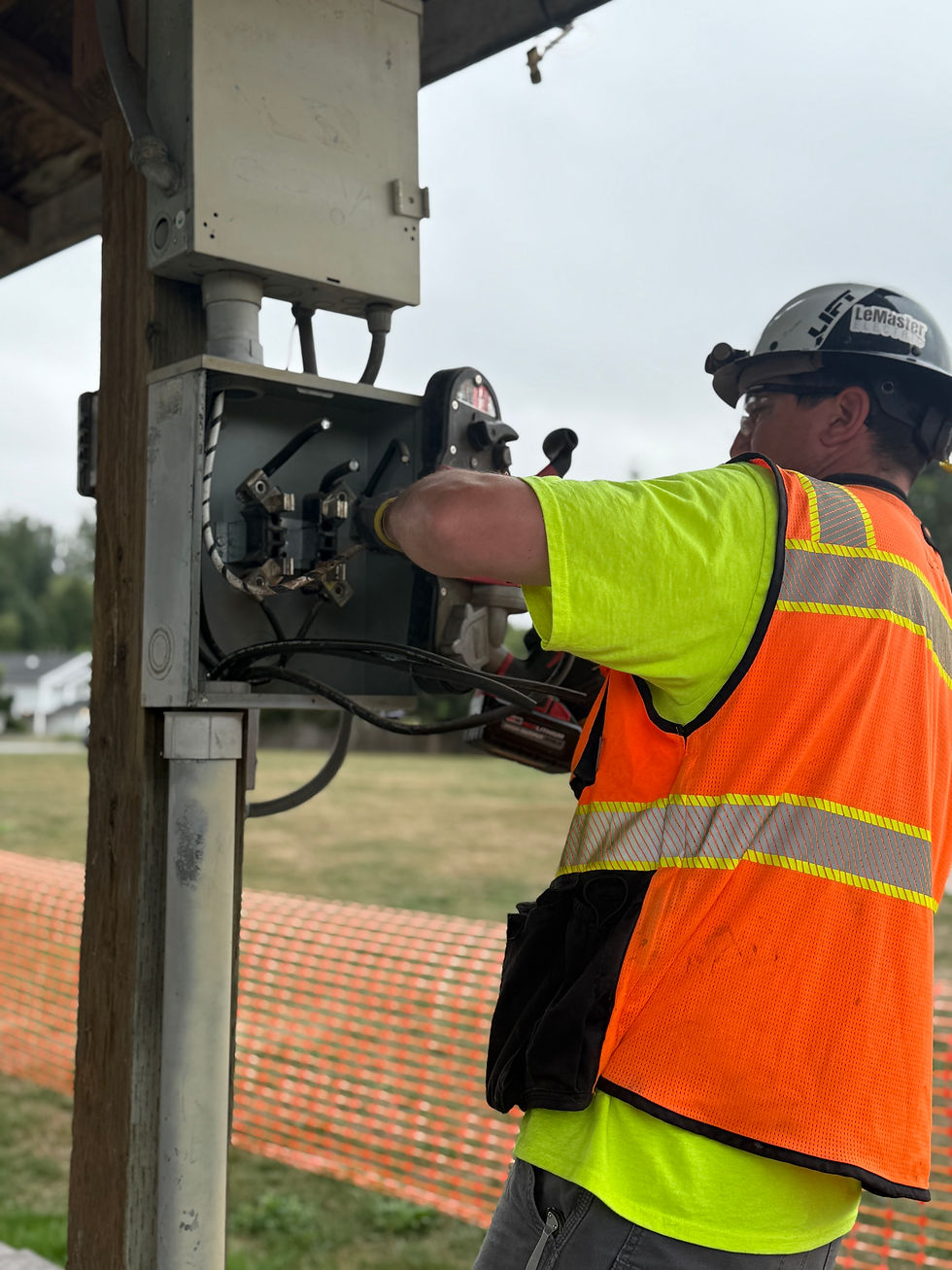
Modern construction sites increasingly rely on temporary electrical systems well into advanced project phases. These systems may operate for months rather than weeks, with load profiles that resemble permanent installations more than provisional setups.
As demand increases, risks emerge when temporary systems are not evaluated for:
Aggregate load capacity
Continuous and non-continuous load interaction
Proper overcurrent protection
Grounding and bonding continuity
Temporary installations that are treated as short-term conveniences may not account for the electrical stresses they experience over time.
Frequent Changes Increase Risk
Temporary power systems are modified more often than permanent installations. Equipment is added, relocated, or removed as trades mobilize and demobilize. Each modification introduces potential changes to load balance, conductor utilization, and fault pathways.
Without technical evaluation during these changes, conditions can develop that are not visually apparent but materially affect safety.
Environmental Exposure Compounds Electrical Stress
Unlike permanent systems, temporary power is often exposed to weather, physical impact, and uneven terrain. Moisture intrusion, temperature fluctuation, and mechanical damage all influence conductor performance and connection integrity.
These factors increase the importance of evaluating electrical characteristics—not just physical installation—throughout the duration of use.
Fault Response Matters More in Temporary Systems
Temporary power systems frequently lack redundancy. When a fault occurs, the ability of protective devices to operate correctly is critical. Fault current availability, grounding effectiveness, and impedance in the fault path all influence how a system responds under abnormal conditions.
Failures in temporary systems tend to escalate quickly due to the proximity of personnel and the density of activity on active job sites.
A Shifting Industry Reality
Temporary power is no longer a minor supporting system. It is a critical infrastructure component that directly affects jobsite safety, schedule continuity, and liability exposure.
Current trend: Temporary electrical systems are being evaluated more like engineered installations, reflecting their expanded role and increased risk profile.
Key Takeaway
As temporary power systems support higher loads for longer durations, electrical safety increasingly depends on understanding the technical factors that influence performance under real jobsite conditions. Proper installation remains essential—but evaluating electrical demand, protection, and fault response throughout the project lifecycle is becoming equally important.
Recent posts


Safety & Code Compliance
Does Your Home Still Have a Zinsco or Federal Pacific Panel? What Homeowners in Snohomish, King, and Skagit Counties Need to Know
Today, both panel types are considered high-risk electrical equipment due to documented design defects that can prevent breakers from shutting off power during an overload. Because of these risks, electricians, inspectors, insurers, and real estate professionals across Washington State frequently recommend replacing Zinsco and Federal Pacific panels with modern electrical panels.
%20(1).webp)
Safety & Code Compliance
Aging Electrical Infrastructure: Risks Emerging in Mid-Life Commercial Buildings
Many commercial buildings constructed between the 1980s and early 2000s are now entering a mid-life phase for their electrical infrastructure. While these systems may still be operational, the conditions under which they were designed often no longer reflect current usage.